
Amazon Shop Direct lets brands appear in Amazon search results without the product being listed or selling on Amazon. What does it means for your brand, how to get featured and possible risks.
Published on
13th April 2026
Read time
13 mins
What We’re Seeing in the Wild
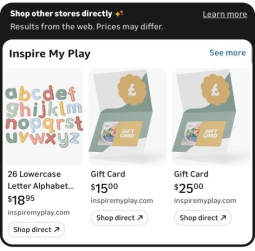
A few weeks ago, while reviewing Amazon search results for one of our partner brands, we spotted something new. A module had appeared directly in the search results, labelled “Shop other stores directly.”
At first glance it looked like a Sponsored Display ad. Product cards, pricing, images, and a “Shop direct” button, all sitting right alongside organic Amazon listings. But it wasn’t an ad. It wasn’t coming from any campaign we were managing. And it wasn’t something the brand had opted into.
Amazon was pulling product data directly from the brand’s own website and surfacing it in search results, giving shoppers a way to leave Amazon and buy from the brand’s site instead. For an agency that’s spent nearly two decades helping brands win inside Amazon’s ecosystem, this was hard to ignore. Amazon was actively sending customers away. After digging into it, we now believe this is one of the most important changes Amazon has made in years. Here’s what you need to know.
What Is Amazon Shop Direct?
Amazon Shop Direct is a programme that surfaces products from external brand websites directly within Amazon’s search results, even when those products aren’t listed for sale on Amazon. It launched in beta in February 2025 and has been expanding steadily since.
The concept is straightforward: when a customer searches for a product or brand on Amazon, they may now see results from off-Amazon stores alongside traditional Amazon listings. These are clearly labelled as “Shop other stores directly” and show the merchant’s name, pricing, product images, and a button to visit the brand’s website.
As of March 2026, Amazon says the programme includes over 100 million products from more than 400,000 merchants, and that it has already referred customers millions of times to external stores. Those aren’t small numbers. This is already operating at scale.
How Amazon Shop Direct and Buy for Me Work
When a shopper encounters a Shop Direct product, they have two options.
The first is simple: tap “Shop Direct” and you’re taken to the brand’s own website to browse, evaluate, and purchase as you normally would. The shopper leaves Amazon, and the transaction happens entirely on the merchant’s site.
The second is more interesting. For eligible products, Amazon offers a “Buy for Me” button. Here, Amazon’s AI agent completes the purchase on the customer’s behalf, using their saved Amazon address and payment details, without the shopper ever leaving the Amazon app. The brand still handles delivery, returns, and customer service, but the checkout experience feels seamless.
This is powered by Amazon’s agentic AI, built on models including Amazon Nova and Anthropic’s Claude. It’s an early example of what the industry is calling agentic commerce: AI that doesn’t just recommend products but actually completes purchases on your behalf.
One detail that stands out: Amazon currently charges no commission on Shop Direct orders and no referral fees on Buy for Me purchases. The brand keeps the full margin.
Shop Direct vs. Traditional Amazon Listing: A Quick Comparison
| Traditional Amazon Listing | Amazon Shop Direct | |
| Where does the customer buy? | On Amazon | On the brand's website (or via Buy for Me) |
| Amazon referral fees? | Yes | No (currently free) |
| Who controls pricing? | Influenced by Amazon (Buy Box, MAP issues) | Brand controls pricing on own site |
| Customer data access | Limited | Full (brand's own checkout) |
| Returns and support | Amazon A-to-Z guarantee | Brand's own policies apply |
| Prime badge and trust signals | Yes | No |
Why This Matters for Amazon Sellers
If you’ve been selling on Amazon for any length of time, you’ll know that Amazon has historically done everything possible to keep shoppers inside its ecosystem. The entire platform is built around conversion: keep the customer on Amazon, sell them more, ship it fast.
Shop Direct breaks that pattern. Amazon is now actively helping customers buy from other websites. That’s a big strategic move, and it tells us a few things about where Amazon is heading.
Discovery over transaction. Amazon is positioning itself as a product discovery engine, not just a marketplace. Think of it as Amazon’s answer to Google Shopping: a place where shoppers start their search, even if the purchase happens elsewhere. By expanding the range of products visible in its results, Amazon keeps users coming back first, even for products it doesn’t sell.
Rufus and AI search integration. Shop Direct is tightly integrated with Rufus, Amazon’s AI shopping assistant, which has already reached over 250 million shoppers. Products surfaced through Shop Direct appear in Rufus recommendations alongside traditional Amazon listings. As AI-driven search becomes how more customers find products, this programme opens up a significant new channel.
Data and demand intelligence. While Amazon says it doesn’t charge fees or take commission, it does gain something valuable: data on shopping behaviour that happens off-platform. Understanding what customers search for, click on, and buy from external stores gives Amazon a much richer picture of demand across the market.
The Risks and Controversy Brands Should Know About
Shop Direct isn’t without its problems, and we think it’s worth being upfront about the downsides.
In early 2026, a number of smaller retailers raised concerns publicly about their products appearing in Amazon’s Shop Direct results without their knowledge or consent. Amazon pulls product and pricing data from publicly available information on brand websites, which means your products can show up in Amazon search results even if you’ve never engaged with the programme. Some brands reported that Amazon was displaying out-of-stock items or incorrect pricing, leading to customer confusion and unwanted support enquiries.
Amazon has responded by saying that businesses can opt out at any time by emailing shopdirect@amazon.com, and that removals happen promptly. But the reality is: if your website is publicly accessible with product data, Amazon may already be indexing it.
For brands that do want to take part, there’s also a strategic risk around channel conflict. If you’re already selling products on Amazon’s marketplace and the same products appear in Shop Direct pointing to your website, you’re effectively competing with yourself. The customer who might have purchased on Amazon (where you’re paying referral fees but benefiting from Prime trust signals and the A-to-Z guarantee) may instead click through to your site where none of those trust signals exist.
The smarter approach, and one we’d recommend to our partner brands, is catalogue segmentation. Keep your core Amazon products fully optimised on the marketplace. Use Shop Direct for products that are exclusive to your website: items with margins too slim for Amazon’s fee structure, limited editions, bundles, or SKUs you’ve deliberately kept off the platform.
There’s another risk worth flagging, particularly for brands already selling on Amazon. Amazon actively monitors off-platform pricing and will suppress your Buy Box if it detects lower prices on your own website or through resellers. We’ve seen this happen with brands running larger direct-to-consumer discounts during sale periods, and even with clearance or B-grade stock listed at reduced prices on a separate site. Losing the Buy Box doesn’t remove your product from Amazon, but it adds extra steps to the purchase process and significantly reduces conversion. If you’re connecting your product catalogue to Shop Direct, you’re giving Amazon even more visibility into your pricing, which makes managing this balance carefully all the more important. We’ll be covering Buy Box protection strategies in detail in an upcoming post.
How to Get Your Products Featured in Amazon Shop Direct
There are now two routes into Shop Direct: passive and active.
Passive route. Amazon’s crawlers may already be indexing your website and pulling product data into its search results automatically. If your site has clean product pages with clear titles, pricing, images, and structured data (schema markup), you may already be appearing, whether you intended to or not.
Active route (recommended). As of March 2026, Amazon has opened an official way in through third-party product feed providers. Brands can now sync their catalogue, pricing, and inventory in real time through Feedonomics, Salsify, or CEDCommerce. This gives you much more control over what appears, keeps pricing and stock levels accurate, and positions your products more prominently.
If your feed provider isn’t currently supported, Amazon says to contact shopdirect@amazon.com directly to discuss other options. A self-service merchant portal is also on the way.
Whichever route you take, the quality of your product data makes a real difference. Amazon’s AI, particularly Rufus, surfaces products based on semantic understanding rather than simple keyword matching. Vague titles and thin descriptions won’t cut it. Treat your direct-to-consumer (DTC) product feed with the same care you’d give an optimised Amazon listing: specific, attribute-rich titles; accurate pricing and availability; benefit-focused descriptions; and high-quality images.
Is Amazon Shop Direct Coming to the UK?
This is the question we’re hearing most from our partner brands, and the honest answer is: it’s not officially confirmed yet.
Amazon’s public announcements and documentation are firmly focused on the US market. Shop Direct is currently available to all US customers on Amazon.com, the Amazon Shopping app, mobile web browsers, and through Rufus. The feed integrations with Feedonomics, Salsify, and CEDCommerce are US-focused.
That said, we’re already seeing what looks like related behaviour on the US store for brands with a UK presence, and Amazon’s typical pattern is to test in the US before rolling out internationally. The playbook is usually: US beta, US rollout, then expansion to UK, DE, and wider European markets.
Our advice to UK brands: don’t wait for the official UK launch to get ready. Get your product feeds in order, make sure your website product data is clean and structured, and check that your DTC site is fast, mobile-friendly, and ready to convert traffic from a new source. When Shop Direct does arrive in the UK, the brands that have done the groundwork will benefit first.
What This Means for Your Amazon Strategy
Shop Direct doesn’t replace your Amazon marketplace presence. It adds a new layer to it. For brands that sell on Amazon and also run their own website, this creates a real opportunity to use Amazon’s discovery power to drive DTC sales at full margin, without the platform’s usual fee structure.
But it does require careful thinking. The brands that will get the most from Shop Direct are those that approach it with a plan:
- Segment your catalogue. Keep marketplace products on Amazon. Use Shop Direct for DTC-exclusive products, bundles, and higher-margin lines.
- Invest in product data quality. AI-powered discovery rewards rich, structured, specific product information. Thin content won’t surface.
- Get your DTC site ready. If Amazon is going to send you traffic, make sure your site can convert it. Fast load times, clear shipping and returns policies, mobile optimisation, and accurate stock levels all matter.
- Check what’s already appearing. Search for your brand on Amazon and look for the “Shop other stores directly” module. You may already be in the programme without knowing it.
At AmzIncubator, we’ve been helping brands build profitable Amazon strategies since 2008. Shop Direct is a significant new development in how that strategy works, and we’re already advising our partner brands on how to make the most of it. If you’d like to talk through what it means for your brand specifically, get in touch.
Frequently Asked Questions
What is Amazon Shop Direct?
Amazon Shop Direct is a programme that displays products from external brand websites directly in Amazon search results and Rufus AI recommendations. Customers can click through to the brand’s site to purchase, or use the “Buy for Me” feature where Amazon’s AI completes the purchase on their behalf.
Does Amazon charge fees for Shop Direct?
Currently, Amazon does not charge commission on Shop Direct orders or referral fees on Buy for Me purchases. Brands keep the full margin on these transactions.
How do I get my products into Amazon Shop Direct?
You can take part by connecting your product catalogue through Feedonomics, Salsify, or CEDCommerce. If your provider isn’t supported, contact Amazon directly at shopdirect@amazon.com. Amazon may also be indexing your products passively from your public website already.
Can I opt out of Amazon Shop Direct?
Yes. Amazon says businesses can opt out at any time by emailing shopdirect@amazon.com and that removals are processed promptly.
Is Amazon Shop Direct available in the UK?
Not officially yet. The programme is currently available to US customers across Amazon.com, the app, mobile web, and Rufus. Based on Amazon’s typical rollout pattern, UK availability is likely to follow, but no date has been confirmed. We’d recommend getting your product data and DTC site ready now so you’re prepared when it launches.
Want to understand what Amazon Shop Direct means for your brand?
We’re already helping our partner brands prepare for this. Get in touch to talk through your Amazon strategy.
About the Author
Ben Vallance has been selling on Amazon since 2008 and founded AmzIncubator in 2017 following the exit of a 8 figure brand. Ben is also a guest lecturer at the London South Bank University where he delivers lectures on Amazon and Business Management.
Latest news & updates
31st July 2026
What's the Amazon WAS Price, and How It Affects Your Buy Box
Amazon "was" pricing sets your strikethrough discount and can quietly suppress your Buy Box. Learn how reference pricing works and how to protect it....
Read
8th July 2026
Amazon Subscribe and Save: How Brands Build Recurring Revenue
Amazon Subscribe & Save can build predictable, recurring revenue for brands. Here’s how the programme works on Amazon UK and how to grow a subscriber...
Read
27th May 2026
Preparing for Amazon Prime Day 2026: A UK Seller's Guide
Amazon Prime Day 2026 will take place in June, confirmed by Amazon at the end of April 2026 in its Seller Central announcement. Specific dates...
Read